

 YouTube
 Apple Podcasts
 Spotify
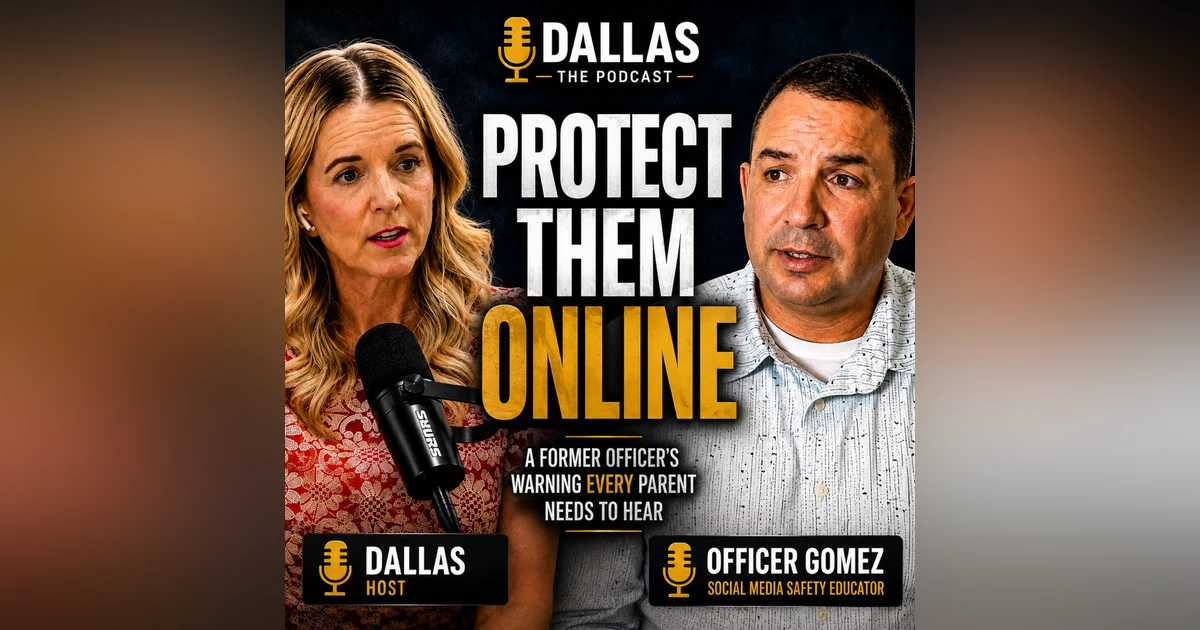
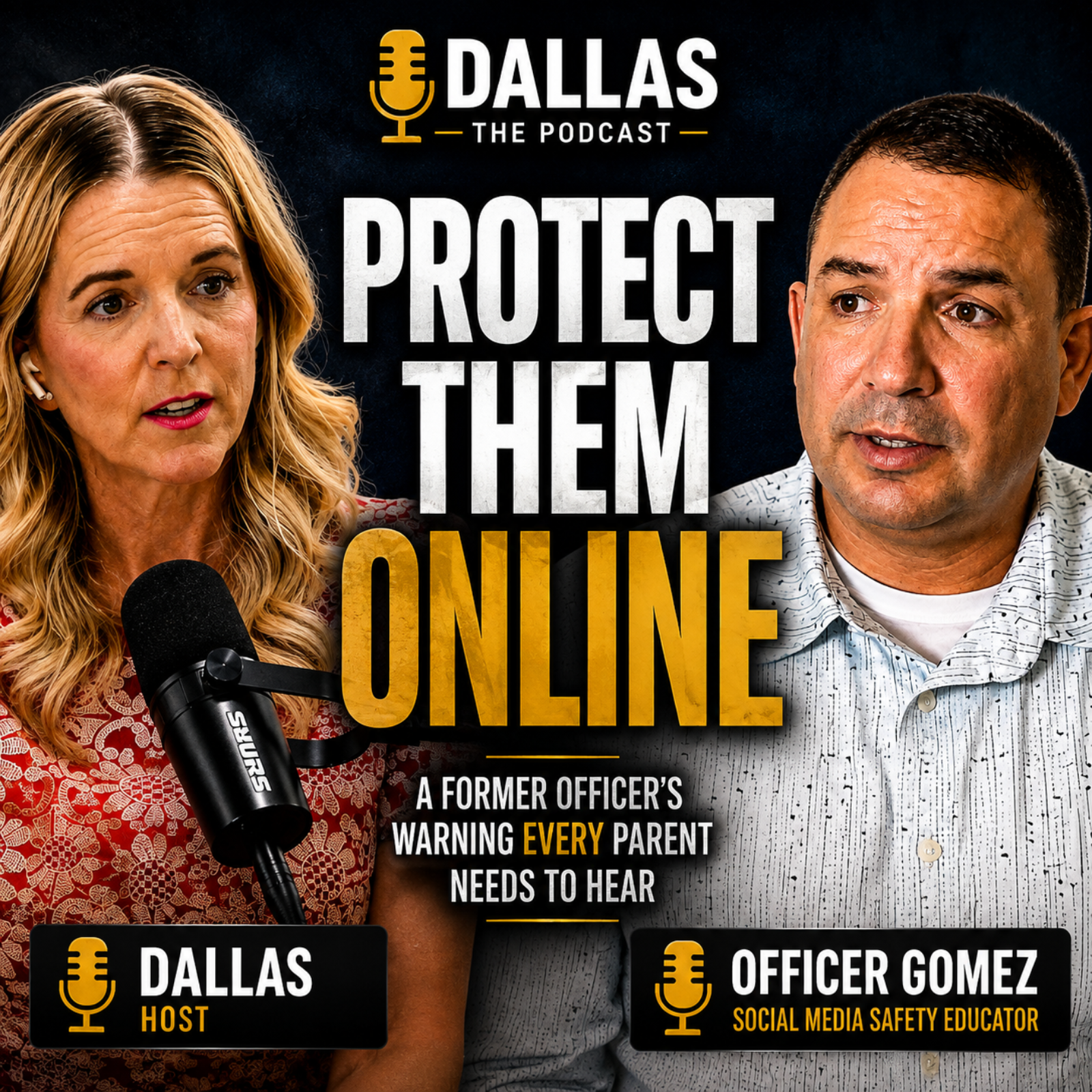
 What Every Parent Needs to Know About Smartphones, Social Media & Online Safety: Officer Dave Gomez
Key Takeaways
- Officer Dave Gomez emphasizes that online safety education for parents is not about creating fear, but about staying informed, prepared, and connected.
- Parents learn practical guidance on determining the right age to give children a smartphone and how to set healthy digital boundaries.
- The discussion uncovers hidden digital risks on popular platforms like Snapchat, Roblox, and Discord that many families overlook.
- Officer Gomez provides crucial warning signs and prevention strategies regarding cyberbullying, online grooming, and sextortion.
- Families are given actionable advice on how to build trust, monitor devices effectively, and respond calmly when a child makes a digital mistake.
In this powerful episode of Dallas the Podcast, Dallas sits down with Officer David Gomez, a longtime law enforcement officer, School Resource Officer, and trusted advocate for online safety.
Officer Gomez shares the story behind his mission and the experiences that led him to become a leading voice for parents navigating today’s digital world. The conversation explores smartphones, social media, cyberbullying, online predators, sextortion, gaming platforms, artificial intelligence, and the hidden risks many families do not see until something goes wrong.
This episode is not about creating fear. It is about helping parents become more informed, more prepared, and more connected to their children. Officer Gomez offers practical guidance on setting boundaries, monitoring devices, building trust, recognizing warning signs, and creating a home where children feel safe asking for help.
Whether you are a parent, grandparent, teacher, coach, or caregiver, this is a conversation every family needs to hear.
In this episode, you’ll learn:
• When children should receive smartphones
• Social media boundaries and parental monitoring
• Snapchat, Roblox, Discord, and gaming platforms
• Cyberbullying and online harassment
• Sextortion and online grooming
• Artificial intelligence, deepfakes, and emerging digital threats
• Warning signs every parent should recognize
• How to respond when a child makes an online mistake
• Building trust without sacrificing safety
• The conversations every parent should have today
If this conversation encouraged or equipped you, please share it with a parent, grandparent, teacher, coach, or caregiver. One conversation has the power to protect a child, strengthen a family, and make a lasting difference.
Keywords: parenting podcast, online safety for kids, smartphone safety, social media safety, digital parenting, cyberbullying, sextortion prevention, online predators, internet safety for families, protecting children online, AI safety, raising teenagers, family communication, Officer David Gomez, Dallas the Podcast.
Frequently Asked Questions
When should children get a smartphone according to Officer Dave Gomez?
While timing varies by family maturity, the episode stresses that giving children smartphones requires establishing firm boundaries, parental monitoring, and ongoing communication before handing over the device.
What online safety risks do platforms like Roblox and Discord present?
Popular gaming and communication platforms often feature built-in chat functions where online predators can attempt to groom or interact with children disguised as peers.
How can parents protect their kids from sextortion and online predators?
Parents can protect their children by monitoring device usage, maintaining open lines of communication, and educating kids on the dangers of sharing private images or talking to strangers online.
What should a parent do if their child makes a mistake online?
Parents should respond with support rather than extreme punishment to ensure children feel safe coming to them when online situations go wrong.