How Does Blind Golf Work? The Rules, Mechanics, and Guide System
Blind golf is an adaptive sport that allows visually impaired and blind athletes to compete at a high level. By utilizing sighted coaches as physical guides, players rely on precise verbal descriptions and alignment techniques to set up shots, master their swings, and navigate regulation golf courses just like sighted golfers.
Key Takeaways
- Blind golfers use specialized classifications ranging from B1 (completely blind) to B3 (partially sighted) to ensure fair competition.
- A sighted coach or guide acts as the player's eyes, helping with club selection, yardage, and course alignment.
- The swing itself is entirely performed independently by the athlete once alignment is established.
- Major international championships exist specifically for visually impaired golfers, showcasing elite global talent.
- Communication and absolute trust between the player and the guide are the foundational elements of success on the course.
The Classification System in Blind Golf
To ensure fair play and competitive integrity, international blind golf organizations utilize a strict classification system managed by the International Blind Golf Association (IBGA). Athletes are categorized into three distinct classes based on their visual acuity and field of vision. These classifications—B1, B2, and B3—level the playing field so that golfers compete against others with similar visual capabilities.
The B1 category represents totally blind athletes, or those with very low light perception and no form of visual acuity. Players in this classification typically wear specialized blackout glasses or blindfolds during tournaments to ensure absolute fairness. The B2 category includes players with moderate visual impairment, while B3 covers those with the highest degree of sight within the legally blind spectrum, yet still facing significant visual limitations that impact their daily lives and sporting performance.
The Crucial Role of the Sighted Guide
Unlike traditional golf where a caddie simply carries the bag and offers strategic advice, a blind golf guide serves as the athlete's eyes and directional compass. The relationship between a blind golfer and their guide is built on deep trust, precise communication, and seamless coordination. When three-time World Blind Golf Champion Jeremy Poincenot steps onto the course, his guide—often his father—plays an instrumental role in every single stroke.
The guide is permitted to perform several essential tasks that would be illegal under standard USGA rules for sighted players. These duties include describing the layout of the hole, identifying hazards like bunkers and water, and physically aligning the player's body and clubface toward the intended target. Once the alignment is finalized and verified, the guide steps away, leaving the execution of the golf swing entirely up to the athlete.
Alignment and Setup Techniques
Setting up a golf shot without sight requires a systematic approach. The guide stands behind the player, holding a club or alignment stick parallel to the desired target line. The player uses this tactile or verbal reference to position their feet and shoulders. The guide then provides clock-face directions or descriptive adjustments, such as moving the left foot two inches back, until the stance is completely dialed in.
This meticulous setup process eliminates the guesswork. Because golf is a game of millimeters and degrees, the guide's precision during alignment dictates whether the ball will fly down the fairway or drift into the rough. It is a collaborative partnership where the guide translates the visual world into actionable spatial data.
Adapting the Swing and Mastering Muscle Memory
A common misconception is that blind golfers require a modified or unorthodox swing. In reality, the physical mechanics of the golf swing remain identical to traditional golf. Because vision is removed from the dynamic movement of the swing itself, blind athletes rely heavily on proprioception—the body's ability to sense movement, action, and location—along with deeply ingrained muscle memory.
Without the distraction of watching the ball flight or tracking a wayward slice visually, blind golfers often develop an exceptional sense of rhythm and tempo. They tune in entirely to the physical sensation of impact. When the clubface strikes the sweet spot, the feedback travels up through the shaft and into the hands, providing instant confirmation of a well-executed shot.
Navigating Hazards and Green Reading
Moving across an 18-hole golf course presents unique logistical challenges for visually impaired athletes. From navigating steep slopes and deep bunkers to walking across varying terrain, the guide ensures the player moves safely between shots. However, once they reach the putting green, the strategy shifts once again.
Reading the green involves the guide walking the surface, feeling the slope with their feet, and describing the contour, speed, and break to the player. For example, the guide might explain that a putt requires a firm stroke starting two feet outside the right cup to account for a severe right-to-left slope. The player visualizes this description mentally, steps up to the ball, and strokes the putt based on that shared spatial awareness.
Conclusion
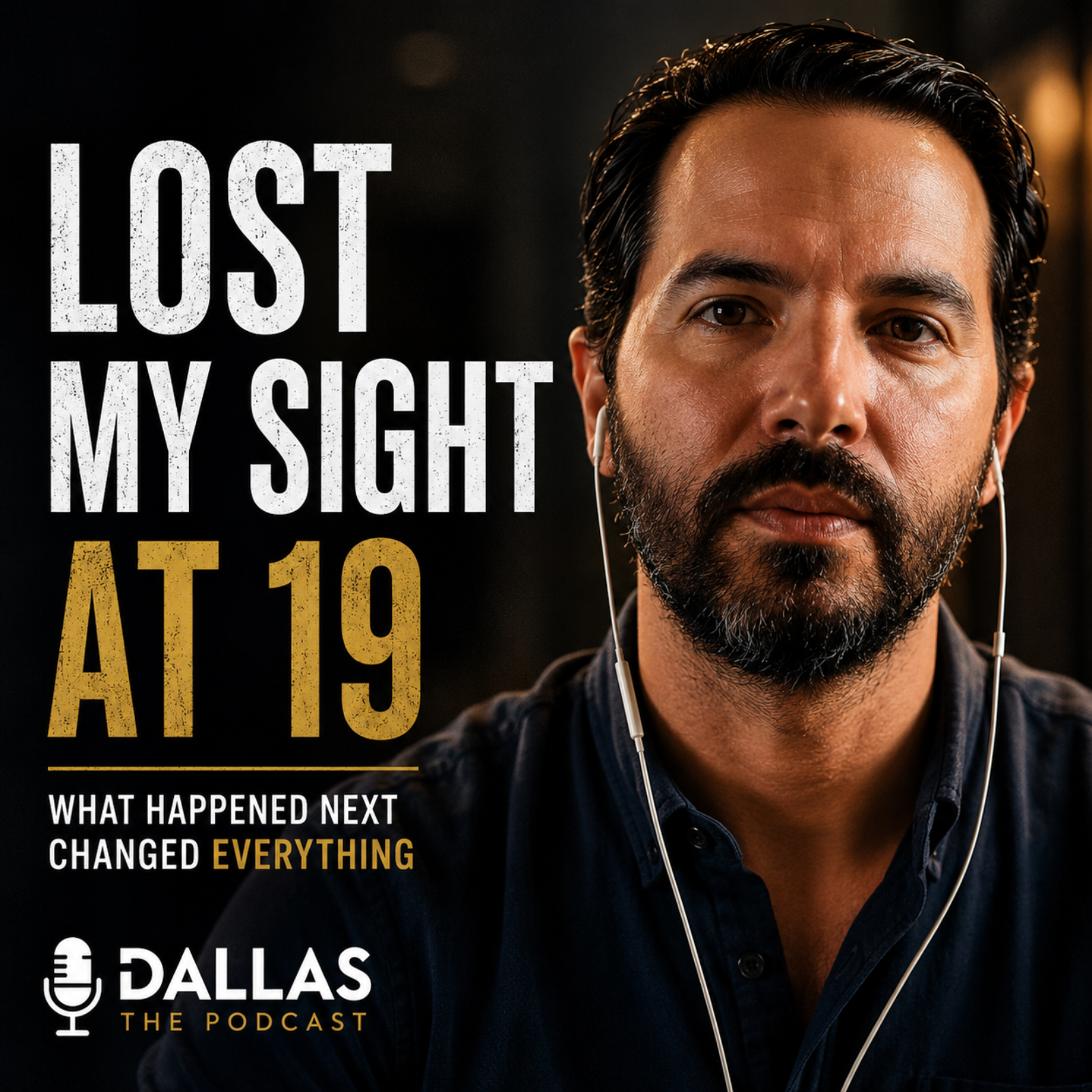
Adaptive sports like blind golf prove that physical limitations do not define an athlete's potential. Through innovative guide systems, strict classifications, and unwavering dedication, visually impaired golfers compete at the highest international levels. To hear more about overcoming adversity, maintaining resilience, and the inspiring journey of a world champion, Listen to the full episode of Dallas | The Podcast. Subscribe today to catch more inspiring interviews with everyday people turning challenges into endless possibilities.
Frequently Asked Questions
Do blind golfers play with a special type of golf ball?
No, blind golfers use standard regulation golf balls. The challenge lies entirely in the setup, alignment, and execution of the swing rather than modifying the equipment of the game itself.
Are guides allowed to help with the golf swing?
Guides are strictly prohibited from helping with the physical swing. Their role is limited to course description, club selection, and aligning the player's body and clubface before the shot. Once aligned, the player swings entirely on their own.
How do blind golfers know where the hole is located?
Guides provide precise yardage, directional alignment, and detailed descriptions of the green's contours and slopes. On the putting green, guides often stand near the pin and make sound cues or give verbal instructions so the player knows the exact direction of the cup.
Can anyone become a blind golf guide?
Yes, family members, friends, or volunteer golfers can act as guides. However, competitive blind golf tournaments often require strong communication skills and a deep understanding of course management to ensure the player is set up effectively.